ChatGPT Ads Explained: Start Date, How They Work, Pricing, and Google or Meta Ads Compared
OpenAI now sells ads inside ChatGPT, to more than 100,000 advertisers in 89 countries. Here is when it started, how the ads are chosen and priced, and where I think they fit next to Google and Meta.
For two decades, paid acquisition has mostly meant two auctions: Google for people who are searching, Meta for people who are scrolling. In 2026 a third one opened, inside the app where a lot of buyers now do their research. I have been reading everything OpenAI has published about it, and this is my plain summary for founders and marketing leads deciding whether to put budget behind it.
The short answer
ChatGPT ads are sponsored placements that appear below ChatGPT's answers for logged-in adults on the Free and Go plans. OpenAI announced the plan on 16 January 2026, started testing in the United States on 9 February 2026, and by 21 October 2026 had more than 100,000 advertisers in 89 countries. Businesses buy them through a self-serve Ads Manager at ads.openai.com, paying per impression or per click.
Timeline: how ChatGPT ads started
| Date | What happened |
|---|---|
| 16 Jan 2026 | OpenAI publishes its approach to advertising and says it will test ads in the US on the Free and Go tiers. Plus, Pro, Business and Enterprise stay ad-free. |
| 9 Feb 2026 | Ad testing starts in the United States for eligible logged-in adults. |
| Spring - summer 2026 | The self-serve Ads Manager opens at ads.openai.com, then ads expand to markets including the UK, Mexico, Brazil, Japan and South Korea. |
| 18 Aug 2026 | ChatGPT Ads expands across Europe. |
| 23 Sep 2026 | Expansion to Southeast Asia and Taiwan. |
| 5 Oct 2026 | A new visual ad format (tested during image generation), plus measurement integrations and brand-safety pilots. |
| 21 Oct 2026 | 26 more countries, including Pakistan, Nigeria, South Africa and much of Latin America. Total: 89 countries and over 100,000 advertisers. |
Why this matters
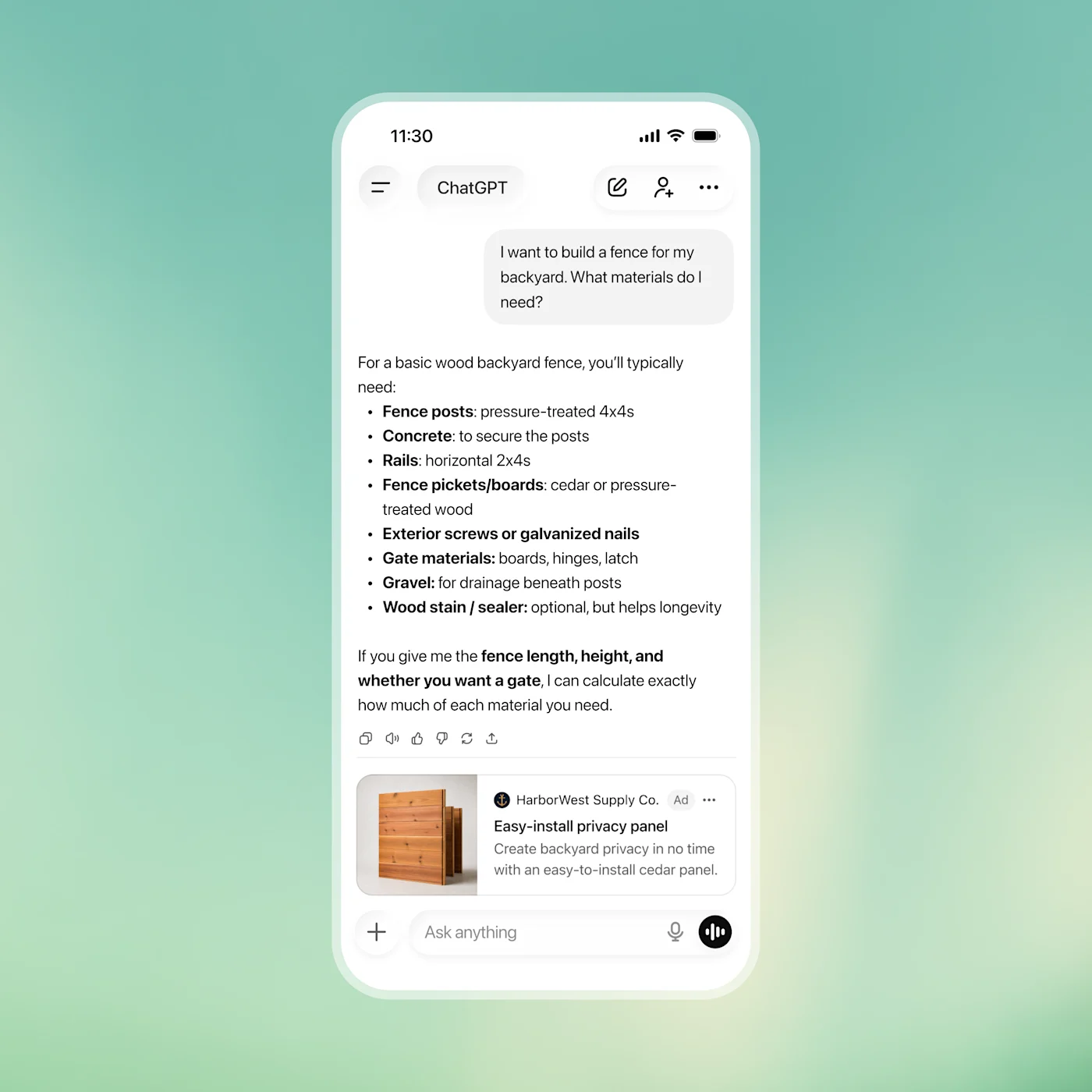
OpenAI says ChatGPT reaches 1.2 billion people a week. More importantly, people use it at the moment they are weighing options: "which CRM for a 20-person team", "what do I need to build a fence", "best clinic software for a medspa". That is the middle of the funnel, the stretch where search ads catch a keyword and social ads hope for an impulse. ChatGPT sees the whole question, the follow-ups and the constraints.
For advertisers that is a new kind of signal. For everyone else it is a test of trust, and OpenAI clearly knows it. Its stated principles are worth knowing before you spend a dollar:
- Answer independence. Ads do not change what ChatGPT answers. They are separate and clearly labelled.
- Conversation privacy. Advertisers do not see your chats, and OpenAI says it never sells user data to them.
- Choice and control. People can turn off ad personalisation and clear the data used for ads, and there is always an ad-free paid option.
- No ads for under-18s, and none near sensitive or regulated topics such as health, mental health or politics.
How the ads work
The format
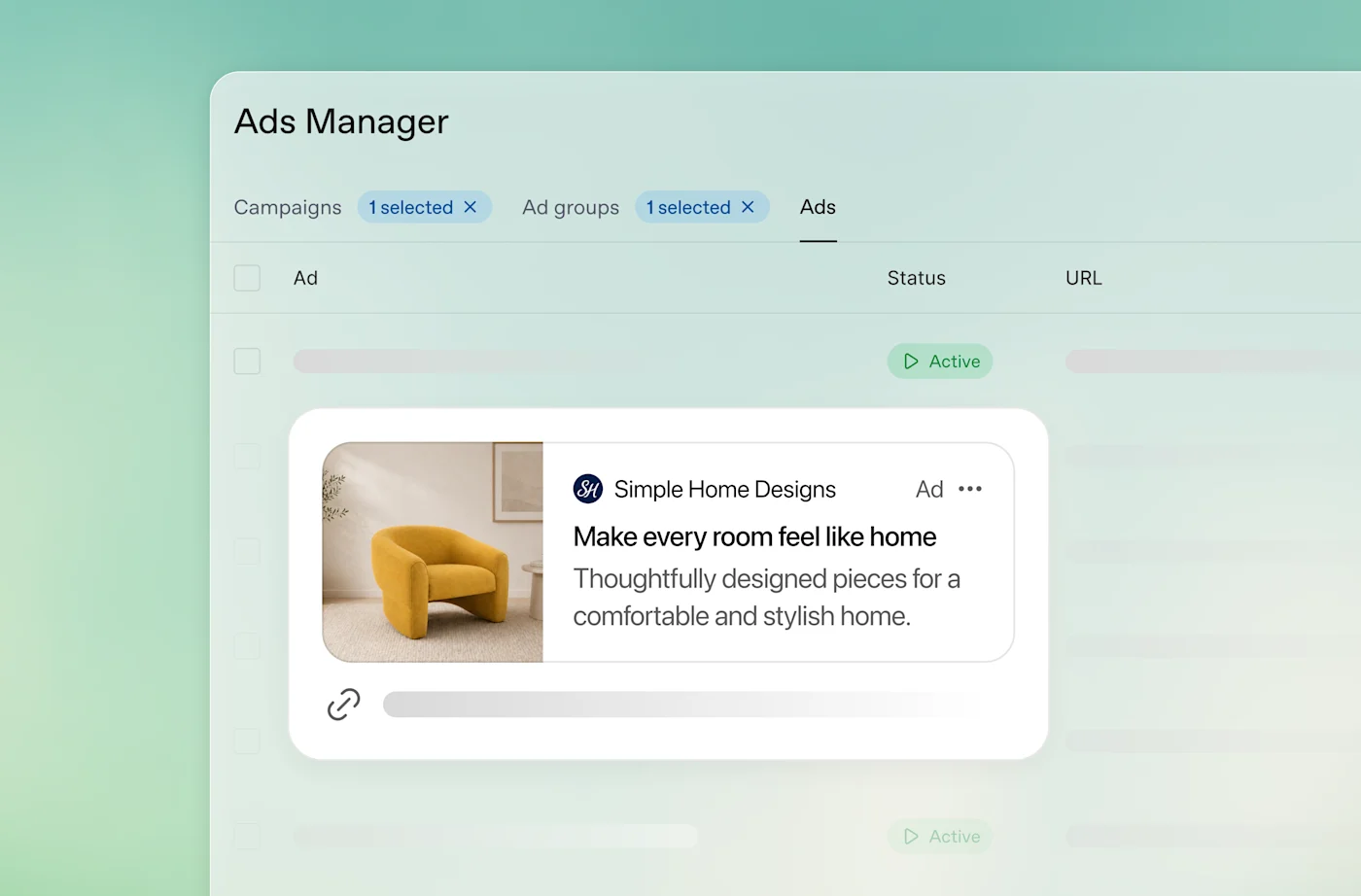
The standard unit sits below a ChatGPT response and has six parts: advertiser name, favicon, headline, description, landing page and an image. In October OpenAI added a visual format that shows product imagery during image generation, starting with a group of US advertisers.
Targeting: context, not keywords
This is the biggest mental shift for anyone who grew up on Google Ads. There is no exact-match keyword list. The system picks ads using the context and intent of the current conversation, your landing page, headline and copy, and, where the user has personalisation on, some signals from their wider ChatGPT use.
What you do control is context hints at the ad-group level: descriptions of the conversations, topics or keywords where your offer is relevant. OpenAI is explicit that these guide matching but do not guarantee delivery. Qualifying advertisers can also add negative phrases to keep ads away from contexts that clash with their brand.
Pricing and the auction
You can buy on impressions or on valid clicks, with three goals: Views (impression-based reach), Clicks (traffic) and Conversions (optimised toward a standard conversion event, still billed per click). You set a maximum CPM or CPC bid per ad group. For CPC campaigns, OpenAI's own guidance is to start with a maximum bid of $3 to $5 per click. Ads are chosen in a relevance-weighted, second-price auction, so a more relevant ad can beat a higher bid.
Measurement
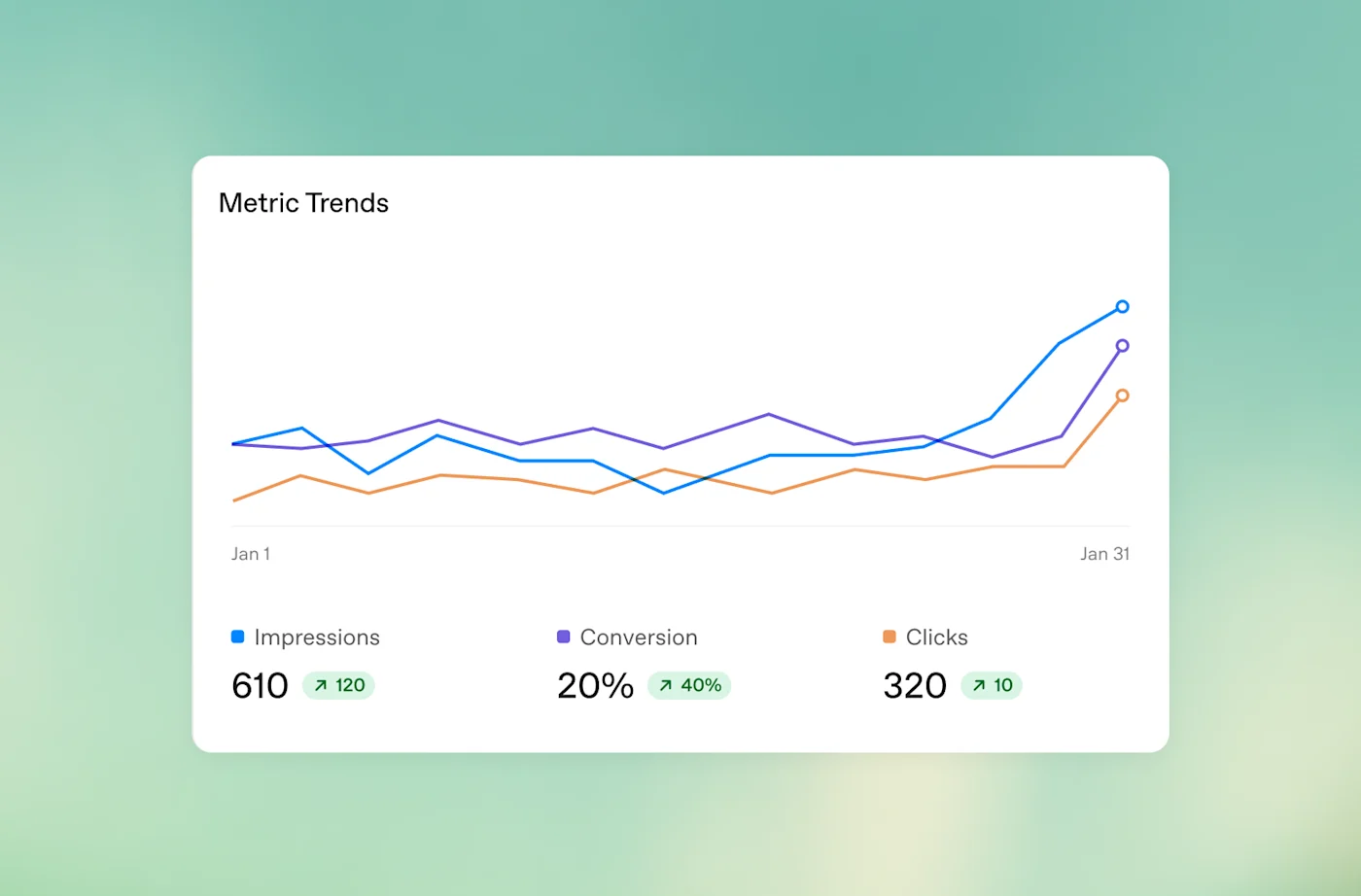
Reporting covers impressions, clicks, spend, CTR, average CPC, average CPM and conversions, with impressions and clicks refreshing roughly every 15 minutes (spend can lag 7 to 8 hours). You can add UTM parameters, send conversions through Hightouch, Tealium or LiveRamp, and use attribution partners including AppsFlyer, Triple Whale, Adjust, Northbeam, Branch and others. OpenAI is also running early incrementality tests with Haus, Measured and WorkMagic.
Need Help Implementing This?
If you are running a system implementation — CRM rollout, automation build, or integrations project — I can help you structure the delivery, identify the critical path, and keep the go-live date intact.
Book a Strategy Call →Are ChatGPT ads better than Google ads or Meta ads?
Not better. Different, and earlier. Here is how I would compare them today.
| ChatGPT ads | Google ads (search) | Meta ads | |
|---|---|---|---|
| What triggers the ad | The meaning of a whole conversation, plus your context hints | The keyword someone types | Who someone is: interests, behaviour, lookalikes |
| Funnel stage it suits | Consideration: comparing, weighing trade-offs | High intent: ready to find or buy | Discovery and demand creation |
| Control | Low to medium: hints and negative phrases, no exact match | High: match types, negatives, bidding strategies | High: audiences, placements, creative testing |
| Maturity | New. Formats and tools still arriving | Over 20 years of tooling | Very mature, deep retargeting |
| Measurement | Native reporting, conversion API partners, early incrementality | Very deep, GA4 integration | Very deep, but more modelled since privacy changes |
| Competition today | Thin compared with the incumbents | Crowded in most categories | Crowded |
The early numbers OpenAI has shared are encouraging, but they come from partners chosen to tell a story, so treat them as signals, not benchmarks. According to DV Rockerbox, WeightWatchers' attributed cost per acquisition on ChatGPT ads was 15.3% lower than its blended paid-search benchmark. WorkMagic found 67% of the wellness brand Dose's incremental purchases came from net-new customers, and Triple Whale reported that 93% of Portland Leather's ChatGPT visitors were new.
My read: ChatGPT ads reach people your search and social campaigns often miss, at the point where they are still deciding. Google still wins when the buyer already knows what they want. Meta still wins when they do not know yet and need a nudge. ChatGPT sits between the two.
Who should test ChatGPT ads now
- Considered purchases. Software, home improvement, clinics, education, B2B services, travel: anything people research and compare before buying.
- Clear, specific offers. The ad competes with a very good answer sitting right above it. A vague brand message will look weak next to it.
- Teams that can measure properly. If your conversion tracking is shaky, fix that first. A new channel with thin attribution is how budgets get wasted.
Probably wait if you sell a low-consideration impulse product, if your landing pages are slow or generic, or if you cannot yet spare a test budget you are prepared to learn from.
How I would run a first test
- Fix tracking first. UTM parameters on every ad and a conversion event wired through Ads Manager or one of the integration partners.
- Write context hints like a customer. Describe the real questions people ask before they buy from you, in their words, not your category jargon.
- Build landing pages that continue the conversation. The visitor arrives mid-research. Answer the comparison they were having, then make the next step obvious.
- Start on clicks. Begin with a Clicks campaign inside OpenAI's suggested $3 to $5 maximum CPC range, read the data for a couple of weeks, then move to conversion optimisation once events are flowing.
- Judge it on new customers. Compare cost per acquisition and the share of net-new buyers against your search and social numbers, not just CTR.
This is exactly the kind of channel test I build into a client's growth system: the tracking, the CRM routing and the follow-up that turns a click into a booked call. If you want a second pair of eyes on yours, see my performance marketing work or book a call.
Sources. OpenAI: "Our approach to advertising and expanding access to ChatGPT" (16 Jan 2026), "Building advertising for the way people use AI" (5 Oct 2026), "ChatGPT Ads expands to 26 new countries" (21 Oct 2026), and the OpenAI Help Center articles "Ads in ChatGPT" and "Ads in ChatGPT: The Basics". Screenshots from ads.openai.com. Details are as published on 31 October 2026 and will change as the product evolves.
Questions people ask me
When did ads start in ChatGPT?
OpenAI announced its plan on 16 January 2026 and began testing ads in the United States on 9 February 2026, for logged-in adults on the Free and Go plans.
Who sees ads in ChatGPT?
Logged-in adults on the Free and Go plans in supported countries. Plus, Pro, Business and Enterprise accounts are ad-free, and accounts identified as under 18 do not see ads.
Do ads change ChatGPT's answers?
OpenAI says no. Its principles state that ads do not influence answers, are always clearly labelled and stay separate from the response.
How much do ChatGPT ads cost?
You bid per impression (CPM) or per click (CPC) in a relevance-weighted second-price auction. For click campaigns, OpenAI recommends starting with a maximum bid of $3 to $5 per click.
Can I target keywords on ChatGPT?
Not in the Google sense. You add context hints describing relevant conversations, topics or keywords, and they guide matching without guaranteeing delivery. Qualifying advertisers can also add negative phrases.
Are ChatGPT ads better than Google or Meta ads?
They are different. Google is strongest for high-intent searches and Meta for discovery. ChatGPT ads reach people mid-research, while they compare options. Early partner results are promising, but the platform is new, so test alongside your existing channels.
Which countries can run ChatGPT ads?
As of 21 October 2026, ChatGPT ads were available in 89 countries, including the US, the UK, much of Europe and Latin America, Southeast Asia, Taiwan, Nigeria, South Africa and Pakistan.
How do I start advertising on ChatGPT?
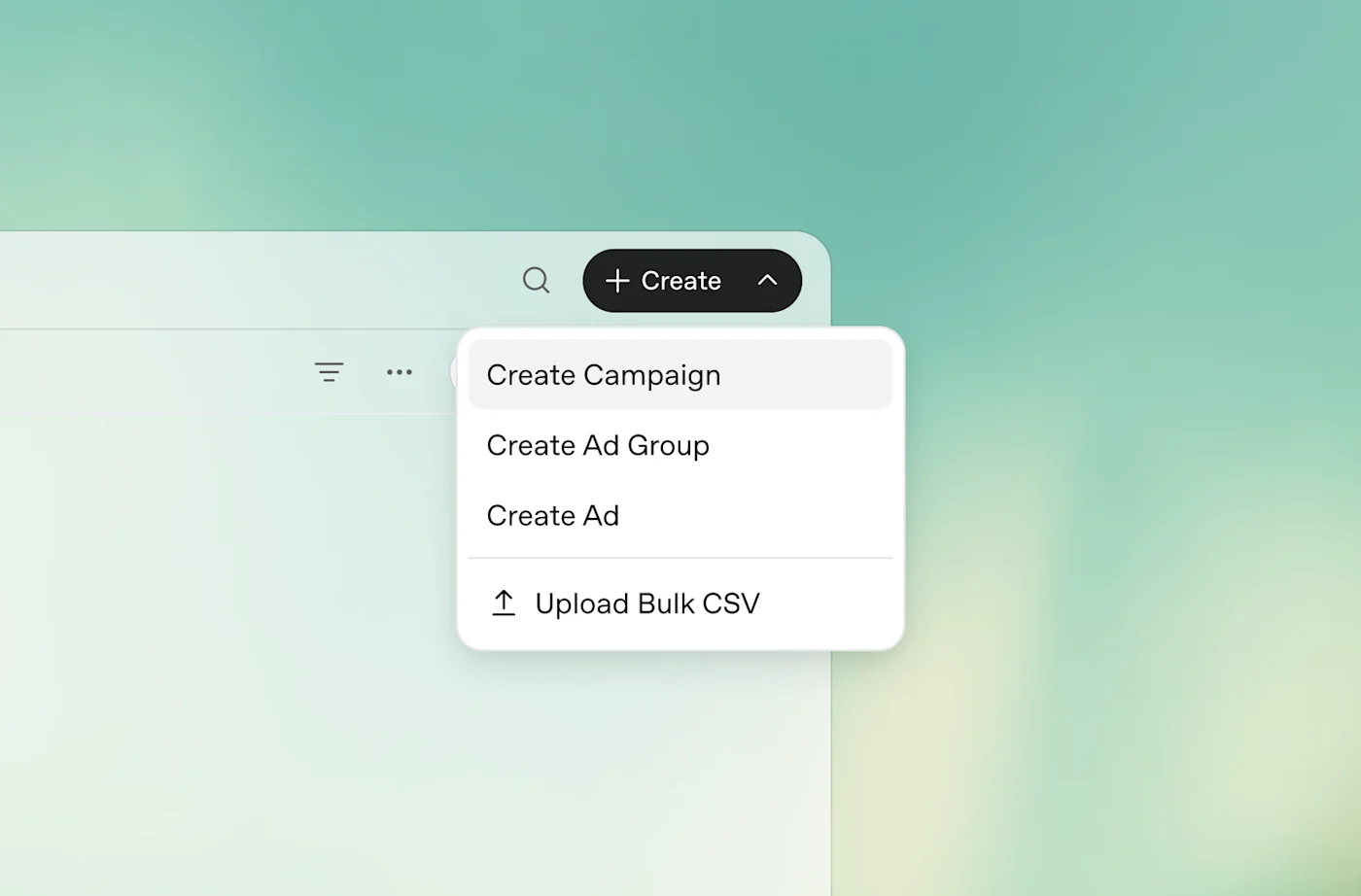
Sign up at ads.openai.com to open Ads Manager, create a campaign with a budget and goal, add your ad details and launch. Larger advertisers can also request sales support there.